Friday, January 31, 2025

UVU Balkans Study Abroad | Emergency Services Department


Summary of the Balkan Study Abroad Program Video

The video introduces the Balkan Study Abroad program, explaining that the Balkans comprise several countries in Southeast Europe, including Kosovo, North Macedonia, and Albania. The program offers an immersive learning experience in developing Eastern European countries, with classes held at the Kosovo Academy for Public Safety. Participants collaborate with local cadets and engage in cross-cultural teaching and learning from both U.S. and Balkan perspectives.

One of the major advantages of this study abroad program is the pre-established relationships that Utah Valley University (UVU) faculty have with local emergency services personnel. This connection provides valuable insights into regional disaster history and response efforts.

Coursework focuses on areas such as:

  • Disaster vulnerability
  • Comparative criminal justice
  • Homeland security
  • Teaching disaster preparedness to Balkan communities

The program emphasizes hands-on learning, where students take on the role of teachers, engaging with local communities to apply their knowledge.

Beyond academics, the program includes weekend excursions to neighboring countries like Albania, Greece, Croatia, and Macedonia. Students immerse themselves in local culture by visiting historic sites, exploring city streets, shopping, and learning from locals.

The program is open to all majors, and students from various academic backgrounds, including both undergraduates and graduates, find relevant learning opportunities.

Finally, the video highlights the career benefits of participating in the program. One student shared how the experience gave them a competitive edge when applying for a position in emergency management, despite having limited post-college experience.

The video concludes with a strong encouragement to join the Balkan Study Abroad program, emphasizing its impact on education, personal growth, and career opportunities.

Here are student quotes taken from the video:

  1. On the uniqueness of the experience:
    “There’s not many people who can say that they actually had an opportunity to study in the Balkans.”

  2. On the immersive nature of the program:
    “You're not going to have any other experience like you do when you do a study abroad.”

  3. On teaching and learning in the Balkans:
    “The students are the ones that are the teachers in this program.”

  4. On cultural exchange and local interactions:
    “With a place like the Balkans, where people are so accepting and so inviting, they receive information from you.”

  5. On exploring different countries:
    “A lot of what we did was exploring the countries that we were in. We would go to the main streets, we would go to the local shops, shop around.”

  6. On enjoying everyday life in the Balkans:
    “We got ice cream probably every day, if not two or three times a day.”

  7. On the value of the study abroad experience:
    “Everyone walked away with something that meant that much more to them because of the experiences we had.”

  8. On how the program shaped career opportunities:
    “Coming home from the study abroad, I had an opportunity where I got to apply in a position for emergency management… it really was the study abroad that gave me the edge over the other candidates to get the position.”

  9. On encouraging others to participate:
    “If you're on the fence about going on the Balkan Study Abroad, don’t hesitate… it will broaden your experience not only personally but also professionally and help propel you forward in your career.”


For more information:

#BalkanStudyAbroad #GlobalLearning #EmergencyManagement #CulturalExchange #DisasterPreparedness

Tuesday, September 14, 2021

Tuesday, May 21, 2019

Remembering the Kosovo War

The militia sang as the marched through the tunnel


Carlos and I visited with a woman who told about her experience as a young woman in the Kosovo War of 1998-1999. She and her family lived in a neighborhood with both Serbian and Albanian residents. For years they lived as friends but when the war came Serbians joined the Serb militia and turned against their Albanian neighbors. Militia were feared more than the Serbian army. Their acts were more heinous, perhaps because the atrocities were committed against neighbors and former friends.

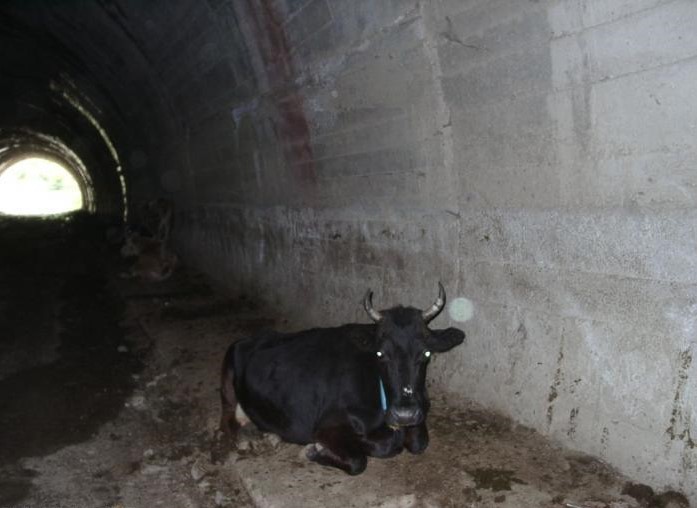
She remembers the singing as the Serb militia marched through the nearby tunnel. They sang about Srebrenica and how this would be much worse. One early morning as their family were eating breakfast, a warning came that they were in danger. They left their meal unfinished and walked into the nearby countryside where they hid for the next months. They found refuge in a small village, fearing everyday that they might be discovered.

When they returned to their home, they found that it had been used as a prison and place of torture. The walls were splattered with blood and other evidence was left of the crimes that occurred there. To this day, no one has lived in the house.

Read more about Srebrenica at  https://www.theguardian.com/law/2010/jun/10/hague-bosnian-serb-srebrenica-genocide1 

Leta was 10 years old during the war.

Saturday, May 18, 2019

Ramadan - the Holy Month

While Kosovo describes itself as as secular society, many of its people are religious. About 95 percent identify themselves as Muslims. The number that practice Islam is much smaller, maybe less than 20 percent. That is except during Ramadan - the Holy Month.

Ramadan is the holiest month for Muslims. It is the ninth month in the Muslim lunar calendar. Healthy adult Muslims fast in Ramadan from dawn until dusk. This includes abstaining from drinking, eating, immoral acts and anger. Other acts of worship such as prayer, reading the Quran and charity are also encouraged during the holy month. Charitable contributions are often given to the Imam for distribution.

Young musicians make money by playing along the streets of Pristina to announce the end of fast. 
 Every year, while Muslims around the world fast during daylight hours, they eat and celebrate during the night. The effect on productivity and health may be devastating. While intermittent fasting may be good for health, Ramadan turns the eating patterns of participants upside down. While participants may fast during the daytime, Muslims wake up early to eat a pre-dawn meal called suhoor, and they break their fast with a meal referred to as iftar. Sleep patterns are also disturbed.

In the Mideast, daytime hours are consistently about 12 hours. Farther north or south the times vary so that in Kosovo on May  18, 2019 day time is 14 hours and 42 minutes. Sunrise is at 5:10 a.m. and sunset is 7:53 p.m. In Oslo or Edmonton, daylight hours are much longer. 

As an outsider, a real benefit I see is the opportunity for adults to become reacquainted with friends and family. Adherents of Ramadan often go out at night to eat with friends or invite friends to their homes. Restaurants are crowded in time to break fast in the evening. Many open at 2 a.m. to offer a pre-dawn meal. A drum rolls and adherents begin their meals at night with water and then dates. We were invited for the evening meal at the Sharrit Restaurant above Tetova in Macedonia. Amazingly, every guest had food on their tables, a lovely soup and cheese sauces with bread. We all began to eat at the same time. A downside may be that children are neglected while parents celebrate. Several times a week we have been feeding two teenagers whose parents are often away at night. One is fasting; the other is not.


Monday, April 22, 2019

Prishtina - City with a Great Vibe


NEWBORN Monument celebrating Kosovo's birth as a nation in 2008

I came across a great article that describes things to do and see in Prishtina (Pristina), the capital of Kosovo. Tom writes: "Prishtina has that 'something' and I really miss it - the relaxed and friendly locals, crazy architecture, superb food and the vibrant streets in summer evenings."

Read the rest of the article at https://www.adventurous-travels.com/posts/prishtina-kosovo-ugly-city-with-a-great-vibe 

Friday, April 5, 2019

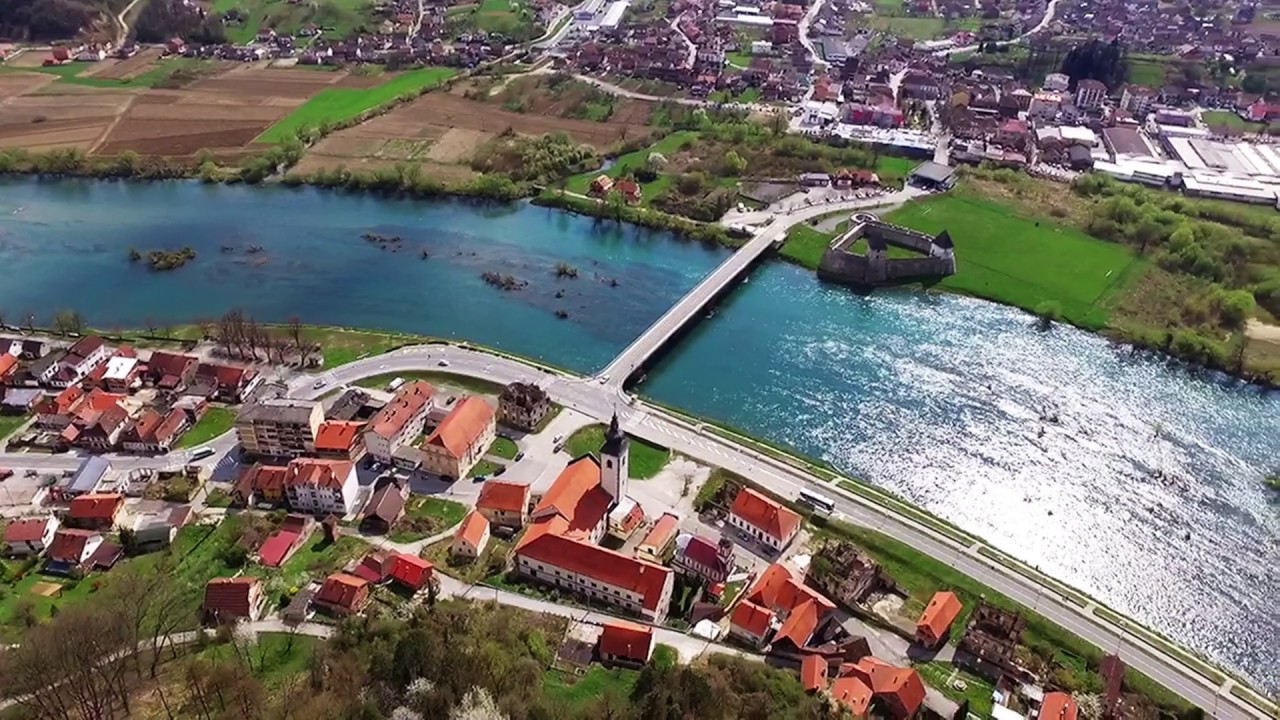
KOSTAJNICA - a town divided

Kostajnica, from all appearances, looks like a peaceful town, with beautiful scenery and an interesting history. Running down the heart of the town is the Una River. On one side of the river is Croatia; on the other is the Republic of Srpska in Bosnia and Herzegovina. It is a town divided between ethnic rivalries and wars that go back centuries, the most recent being the breakup of the Yugoslav Republic in the 1990s, when Croats fought Serbs and Serbs fought Bosniaks.

The Una River divides Kostajnica.
 In 1878 the Kostajnica valley was largely an Albanian community. The Albanians also lived in the rural parts of Toplica, Pusta Reka, and Jablanica valleys while the Serbs lived near the river moths and mountain slopes. The expulsion and genocide of the Albanian population in 1877-1879 left the territory with few Illyrian people, the name for the original inhabitants of the western Balkans. Historian Justin McCarthy estimated that 131,000 Albanian and Turk Muslims lived in the region in 1876. By 1882 the number was 12,000. Most Albanians fled south, many settling in Kosovo. A small number gave up their religion and melted into the Serbian Orthodox population. 

Russia was at war against the Ottoman Empire and requested Serbia's help. Because Serbia feared a fifth column among the Muslim population, the Serbs pursued a policy of enforced expulsion and genocide against the Albanians. While the army had security concerns, the Serb government wanted a homogeneous and reliable population in the region. Before the Serbian army could arrive, the Albanians packed and started moving south. The Serb army followed them, destroying villages and their mosques. At the end of the conflict, the Congress of Berlin  gave the territorial gains to the Kingdom of Serbia. Albanians were forced to relocate to Kosovo, Macedonia, and Thessaloniki. Others found refuge in the Samsun region near the Black Sea.  

Most Albanian refugees were resettled in over 30 large rural settlements in central and southeastern Kosovo. I met recently a descendant of the Kostajnica refugees in Kosovo. She said a small number of Albanians remained in the region and in Kostajnica. The one connection of these people have with their Kosovo cousins is their last name, Kostanica. The name is common to members of the family who live in Kosovo and in their original home in Kostajnica. 

Kostajnica Castle on the Una River.


HRVATSKA KOSTAJNICA - KOSTAJNICA


The entire history of Kosovo explained


How did Kosovo become a country? | The Economist


The Fallout of the Kosovo Expulsion (1999)


Wednesday, March 20, 2013

Veles - on the Vardar river.


Veles was known as an industrial center.  However, with the dissolution of Yugoslavia, many of its industrial companies have closed.  Unemployment is around 50%. Recently, it has become a leader in the implementing of IT in the local administration in Macedonia.

Veles is a city of poetry, culture, history and tradition, as well as a town with plentiful and precious cultural heritage and centuries old churches.

Veles is a municipality of 55,000 people.


Read more at http://en.wikipedia.org/wiki/Veles_%28city%29

Friday, May 14, 2010

Fortress overlooking old Skopje


I can see the Kale fortress from my hotel window in Skopje.  It was built from stone blocks taken from the ruins of the ancient city of Scupi.  It was a Turkish fortress during the Ottoman Empire and was later occupied by the Serbs.  It is now being reconstructed and used as a tourist site.

Day 1 and 2

by John Fisher

My first two days in Macedonia have been busy ones - filled with meetings and meals.

After arriving Thursday, Paul, Goran and I went to Hotel Super 8 in Skopje where I had made my reservations for accommodations.  The hotel is both modern and inexpensive, owned by an American who returned to his native Macedonia to go into business.

Before going to a 5 o'clock meeting with our student leaders we ate at an outside restaurant adjacent to the hotel.  The weather is beautiful in Skopje. Eating outside is the thing to do.  We ate fresh Macedonian salads (like Greek without the olives) and had steak as our main course. The steak was beautifully cooked, very tender and served with a delicious mushroom sauce.  We talked Balkan politics and ate for over two hours.

At 5 we had our meeting.  (I'm still suffering from jet lag and so nod off in most of our meetings.)  Then after the meeting, a new friend took me to dinner in the Albanian section of Skopje.  He is an air force officer working for the Ministry of Defense.  He is working on a PhD, lived for a year in the United States, and has written a book of Albanian-English words.  The meal again started with a fresh salad and the main course was beef sausage links.  Very delicious.

We talked about history, politics, and religion.  He neither drinks nor smokes.  I told him about the Word of Wisdom and how God has shown his love to his children in all ages by giving them health laws through his prophets, like those given in the Old Testament and more recently to the prophets Mohammed and Joseph Smith.

I was exhausted by 11 p.m. and so went to bed only to wake up at 3:30 a.m. (which is 9:30 p.m. in the Midwest United States).  At 4:30 a.m. I heard the call to prayers and at about 5 a.m. I used the Yahoo program on my computer to call my wife and daughter in America.

Today we met with the Macedonian Red Cross and the military nurses and medical team.  Both groups will provide vital instruction and key exercises for our humanitarian training in Krivolak in southern Macedonia next week.  If it was 29 degrees Centigrade in Skopje today, it might have been 39 degrees in Krivolak.  

After our meetings I went with our operations director, his assistant, and Paul to a restaurant where I think I truly had traditional food from the region.  Again it started with fresh salad. Every salad is slightly different.  This one had a tasty herb, possibly parsley. The salad of mainly tomatoes and cucumbers is covered in white cheese.  I asked for extra olives.  So the group accused me of making a southern Macedonia salad.  Southern Macedonia is the part of the country below the Greek border.  

Then we had Macedonian goulash with mashed potatoes covered in the most delicious sauce.  The meal tab for the four of us came to about 20 USD.  This included two soft drinks and two beers for our Macedonian friends.

Arriving in Macedonia

By John Fisher


As I flew into Skopje, I was awed by the snow-capped mountains on either side and the green of the fields below.  The red-tiled roofs of the houses added a special old world charm.


The plane pulled to a stop at Skopje's Alexander the Great airport.  I chuckled at the name.  The Greeks have failed to recognize the Republic of Macedonia, because they claim Macedonia is a province of Greece.  They also claim Alexander the Great as the greatest of Greek warrior kings.  Now the Macedonians, not only have the name, but make claim to Greece's hero.


Read about the name dispute at 
http://wdef.com/news/macedonia_name_dispute/05/2010

Paul and Goran met me at the airport.  Goran drove the military Fiat toward Skopje; then realized he was on the wrong highway.  We were almost to Serbia, he said.  That wouldn't do.  
Macedonia is land-locked, surrounded by Greece in the south, Albania on the west, Bulgaria on the east, and Kosovo and Serbia on the north. 

The latest news from the Associated Press dated May 14, 2010 reads:

SKOPJE, Macedonia - Authorities in Macedonia say they have petitioned neighbouring Kosovo for information on 70 criminal suspects following a shootout this week that left four gunmen dead.
Interior Minister Gordana Jankulovska said Friday she had taken the action following the incident and several large weapons seizures near Macedonia's border with Kosovo.
Authorities say ethnic Albanian criminal gangs are using weapons hidden after a 2001 insurgency and may have taken refuge in Kosovo.
Kosovo' interior minister denied that his government tolerated suspected criminals, arguing that members of powerful crime gangs typically have connections with various countries in the region.
For a small country the size of Vermont Macedonia has very interesting politics. About a third of Macedonians are ethnic Albanians.  The Albanians fought a brief insurrection against the government in 2001, but the government was forced to make concessions to its largest minority that have kept centuries old feelings of nationalism at bay.  A few regional boundary changes could easily make the Albanians the majority in a new nation, rather than the minority.
Macedonia is not unlike many other countries - Canada, Belgium - that have had to make concessions to minorities to keep harmony and create national unity.

Wednesday, May 12, 2010

Overnight in Prague

By John Fisher

My flight from Paris to Skopje on Czech Airlines had me overnight in Prague. I chose this itinerary because I have never been in the Czech Republic.

I got tourist information and picked up Czech money in the airport. I got 1000 Korunas from an ATM. One Koruna was about 5 cents. I knew my hostel stay in downtown Prague would be about 450 Korunas which is about 22 dollars.

The transit from the airport to downtown was 26 Korunas one way. The trip from the airport to downtown was easy. I caught the 119 bus at the airport that took me to the end of the metro line.

It was about 7 p.m. when I checked into the hostel. Since I was out of summer traveling season, I got a dorm room to myself. The Advantage Hostel is old, but the rooms and bathrooms are clean.

Because I wanted to sight see before dark, I postponed dinner. I had had a ham sandwich and water on the airplane - one of the Czech Airline perks.

Four day transit passes are pretty economical, but since I was here one night, I decided to walk. I walked north from my hostel to the museum and Wenceslas Square. It seems a lot like the Champs Elysee of Prague, which chique shops and young people. When I entered the old town, the people were older and more touristy. The old town has all the charm of old Europe - narrow streets and old buildings. Very clean. The beggars lay prone on their faces with their hats out.

I took photos of the old clock tower and then wound my way to the Karluv Most - Charles Bridge - the most famous sight in Prague. It was under repairs. I walked half way across and then back to the old town. I walked south along the Vltava River and then east to my hostel.

I looked for places to eat traditional Cyech food along the way, but ended up following the hostel worker´s advice and eating in the restaurant below the hostel. Prices seemed to be comparable to the less expensive restaurants in Prague - about 145 Korunas for a main dish. When my bill finally came it was 201 Korunas which included two soft drinks, gratuity, and tax - about 10 dollars.

The restaurant, Restaurace Kulovz Blesk at Sokolska 13 had its charm. It wasn´t well publicized from the street, but was very busy at 9 p.m. At the end of a dark passagewaz is an outdoor sitting area - not well lighted. Then through a door and downstairs is the restaurant. The room I sat in had 8 to 10 men in it all talking loudly at once - no music. I liked the noise, although I couldn´t understand.

When I finally ordered, I asked for traditional Czech meals. The only one left was chicken with a wine sauce and dumplings. I really was hoping to get pork and kraut - next time. The meal was hot - chicken and wine sauce delicious. The dumplings made with bacon and brocolli were heavy and bland - not what I would have liked. Combined with chicken and and the wine sauce, the dumplings were okay - just okay. I had two cold tonic drinks - Kinley grapefruit and ginger tonic. I liked the drinks.

It was a close trip up to my room in the hostel. I was exhausted although I had dozed much of the day while waiting in Charles de Gaulle airport and on the plane. It was 11 p.m. - 5 p.m. at home. I hadn´t slept much in 48 hours. I chose an upper bunk, then changed to a lower bunk in the middle of the night. The bed had a lower sheet and a blanket in a white sheet on top. Very cozy. However, Im glad I brought my down pillow from home.

I woke at 3:30 a.m. with a Charley horse that I had to work ouot of my leg. I went downstairs to write on the computer in the dark. The hostel deskman is snoring on a couch behind me. I will eat a complimentary breakfast before I walk to the metro for my trip back to the airport.

Tuesday, April 20, 2010

Prilep, Macedonia's fourth largest city

Prilep is the fourth largest city in the Republic of Macedonia, with a population of 66,246 citizens.It is known as "the city under Marko's Towers" because the towers of King Marko are located northwest of the city. The towers and surrounding village were guarded by only 40 soldiers. Marko is considered a local hero because of his struggle against the Ottomans. After Marko's death in 1395 the settlement was taken over by the Ottomans and remained in their control for 500 years.

Prilep also is noted for its churches, among them the Monastery of St.Michael Varosh which sits on a hill overlooking the city. Build in the 11th century it is one of the few places with a portrait of King Marko. Prilep was under Istanbul's control for six centuries, when it with Macedonia became part of the larger country of Yugoslavia.

Friday, March 12, 2010

About Macedonia


Macedonia gained its independence peacefully from Yugoslavia in 1991, but Greece's objection to the new state's use of what it considered a Hellenic name and symbols delayed international recognition, which occurred under the provisional designation of "the Former Yugoslav Republic of Macedonia." In 1995, Greece lifted a 20-month trade embargo and the two countries agreed to normalize relations. The United States began referring to Macedonia by its constitutional name, Republic of Macedonia, in 2004 and negotiations continue between Greece and Macedonia to resolve the name issue. Some ethnic Albanians, angered by perceived political and economic inequities, launched an insurgency in 2001 that eventually won the support of the majority of Macedonia's Albanian population and led to the internationally-brokered Ohrid Framework Agreement, which ended the fighting by establishing a set of new laws enhancing the rights of minorities. Fully implementing the Framework Agreement and stimulating economic growth and development continue to be challenges for Macedonia, although progress has been made on both fronts over the past several years.

Source: CIA World Factbook